
Blog Detail
-
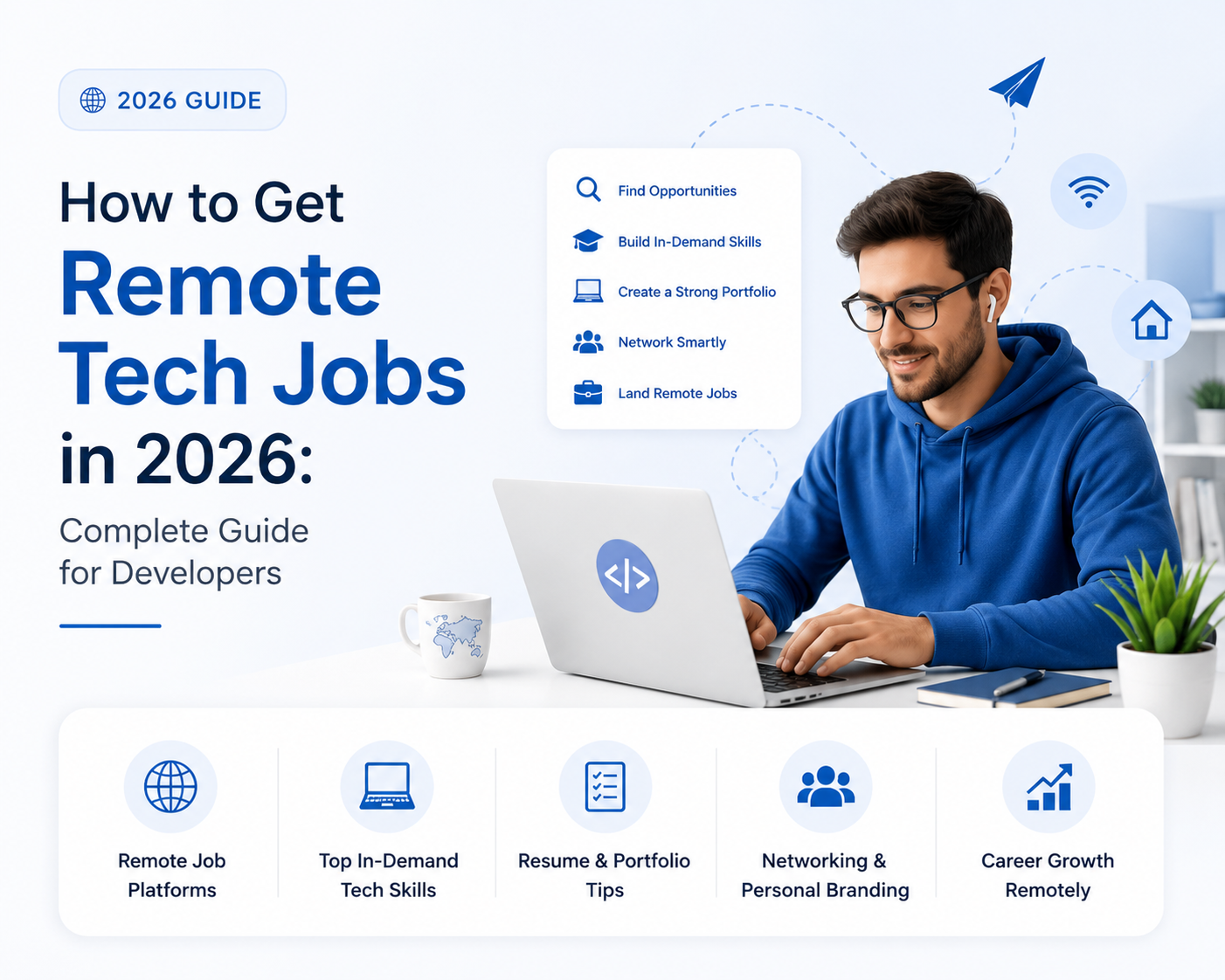
How to Get Remote Tech Jobs in 2026: Complete Guide for Developers
Remote work has transformed the technology industry. In 2026, companies across the world are actively hiring software developers, cloud engineers, DevOps specialists, designers, and data professionals for remote roles. This means talented developers can now work for global companies without relocating.
For many tech professionals, remote jobs offer the perfect combination of flexibility, better salary opportunities, and improved work-life balance. However, getting hired for remote roles requires more than technical skills alone.
In this guide, we’ll explore how developers can land remote tech jobs in 2026.
Why Remote Tech Jobs Are Growing
Remote work is no longer just a temporary trend. Companies now understand that skilled professionals can deliver great results from anywhere.
Key reasons behind remote job growth include:
-
Access to global talent
-
Reduced office costs
-
Increased productivity
-
Flexible work culture
-
Faster hiring processes
Many startups and multinational companies now operate with distributed teams.
Best Remote Tech Roles in 2026
Some tech roles are especially suitable for remote work.
Popular remote positions include:
-
Software Developer
-
Full Stack Developer
-
Frontend Developer
-
Backend Developer
-
DevOps Engineer
-
Cloud Engineer
-
UI/UX Designer
-
Data Analyst
-
AI Engineer
-
Cybersecurity Specialist
These roles rely heavily on digital collaboration and cloud tools.
Skills Required for Remote Jobs
To succeed in remote work, technical skills alone are not enough.
Important skills include:
Technical Skills
-
Programming languages
-
Cloud platforms
-
APIs
-
Databases
-
Git version control
Soft Skills
-
Communication
-
Time management
-
Self-discipline
-
Problem-solving
-
Collaboration
Employers look for candidates who can work independently while staying productive.
Build a Strong Resume
Your resume is often the first step toward getting shortlisted.
A strong remote-job resume should highlight:
-
Relevant technical skills
-
Project experience
-
Freelance or remote work experience
-
Communication skills
-
Tools used for collaboration
Keep your resume ATS-friendly and role-specific.
Optimize Your LinkedIn Profile
Recruiters actively search for remote talent on professional platforms.
Improve your profile by:
-
Updating headline with skills
-
Adding project achievements
-
Using relevant keywords
-
Enabling “Open to Work”
A strong online presence improves visibility.
Prepare for Remote Interviews
Remote interviews differ from traditional office interviews.
Prepare for:
-
Video interviews
-
Coding assessments
-
Screen-sharing tasks
-
Communication evaluation
Before interviews:
-
Check internet connection
-
Test microphone and camera
-
Keep a professional background
-
Join early
Confidence and communication matter greatly.
Best Platforms to Find Remote Jobs
You can search remote opportunities on:
-
Tech job portals
-
Company career pages
-
Professional networking platforms
-
Freelancing platforms
-
Remote-only job boards
Apply consistently and customize applications.
Common Mistakes to Avoid
Many candidates reduce their chances by making simple mistakes.
Avoid:
-
Generic resumes
-
Weak portfolios
-
Poor communication
-
Ignoring timezone requirements
-
Applying without skill matching
Quality applications perform better than mass applications.
Tips to Increase Your Chances
To improve hiring chances:
-
Build real-world projects
-
Contribute to GitHub
-
Earn certifications
-
Practice technical interviews
-
Improve English communication
Continuous learning helps you stay competitive.
Final Thoughts
Remote tech jobs offer incredible career opportunities in 2026. Developers who combine strong technical expertise with communication, discipline, and adaptability can access global job markets and better salaries.
Focus on building in-demand skills, improving your portfolio, and applying strategically. With the right preparation, your next tech job could be fully remote.
-