
Blog Detail
-
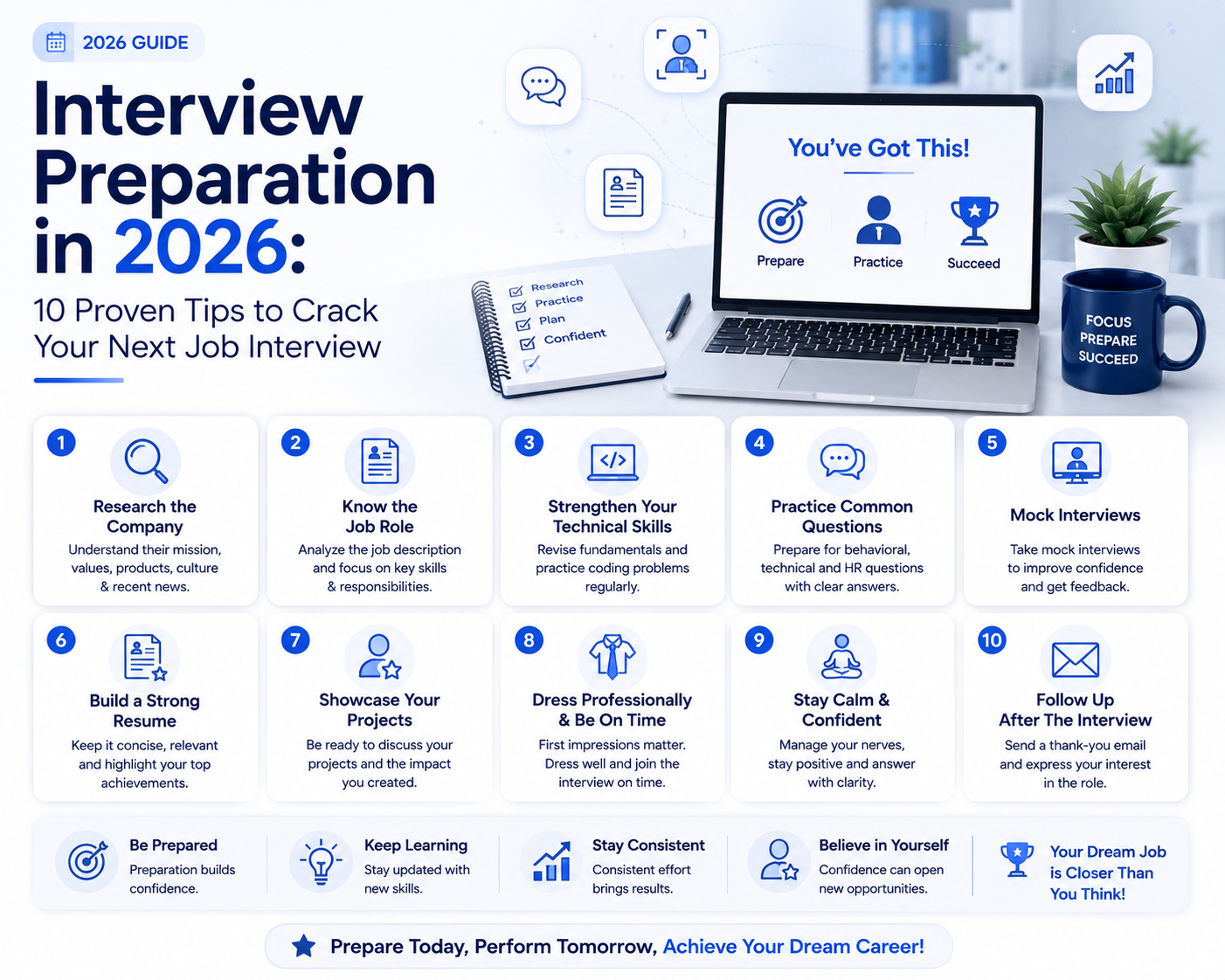
Interview Preparation in 2026: 10 Proven Tips to Crack Your Next Job Interview
Job interviews can feel stressful, whether you are a fresher attending your first interview or an experienced professional looking for better opportunities. In 2026, companies are not just hiring based on technical skills—they also evaluate communication, problem-solving, adaptability, and cultural fit.
Good interview preparation can significantly improve your confidence and increase your chances of getting hired.
Why Interview Preparation Matters
Many candidates have strong skills but fail interviews because they are unprepared. Proper preparation helps you:
-
Answer questions confidently
-
Reduce nervousness
-
Showcase your skills effectively
-
Stand out from other candidates
Recruiters often evaluate both your technical ability and how well you communicate under pressure.
1. Research the Company
Before attending any interview, spend time learning about the company.
Understand:
-
Company products or services
-
Industry and competitors
-
Company culture
-
Recent achievements or news
This shows genuine interest and helps you answer role-specific questions better.
2. Understand the Job Description
Read the job description carefully.
Identify:
-
Required technical skills
-
Responsibilities
-
Tools and technologies used
Prepare examples from your experience that match the role.
3. Practice Common Interview Questions
Some questions appear in almost every interview.
Examples:
-
Tell me about yourself
-
Why do you want this job?
-
What are your strengths and weaknesses?
-
Why should we hire you?
Prepare structured but natural answers.
4. Strengthen Technical Skills
For tech roles, this is critical.
Revise:
-
Core programming concepts
-
Data structures & algorithms
-
Database queries
-
APIs
-
System design basics
Practice coding regularly before interviews.
5. Prepare Real Project Examples
Interviewers often ask about your past work.
Explain:
-
Project goal
-
Your role
-
Challenges faced
-
Solutions implemented
Use real examples to demonstrate problem-solving ability.
6. Improve Communication Skills
Even strong technical candidates can struggle if communication is weak.
Practice speaking clearly and confidently. Avoid very short or overly lengthy answers.
7. Prepare Questions for Interviewers
At the end, most interviewers ask if you have questions.
Ask thoughtful questions like:
-
What does success look like in this role?
-
What technologies does the team use?
-
What growth opportunities are available?
This shows curiosity and professionalism.
8. Practice Mock Interviews
Mock interviews help identify weak areas.
Practice with:
-
Friends
-
Mentors
-
Online interview platforms
This improves confidence and timing.
9. Dress Professionally and Be On Time
First impressions matter.
Whether online or offline:
-
Join early
-
Check internet connection
-
Keep documents ready
-
Dress neatly
Professionalism creates trust.
10. Follow Up After the Interview
Send a polite follow-up message thanking the interviewer.
This leaves a positive impression and shows professionalism.
Final Thoughts
Interview success is rarely about luck. It comes from preparation, confidence, and consistent practice. In 2026, companies seek candidates who combine technical expertise with communication and adaptability.
The more prepared you are, the better your chances of turning interviews into job offers.
-