
Blog Detail
-
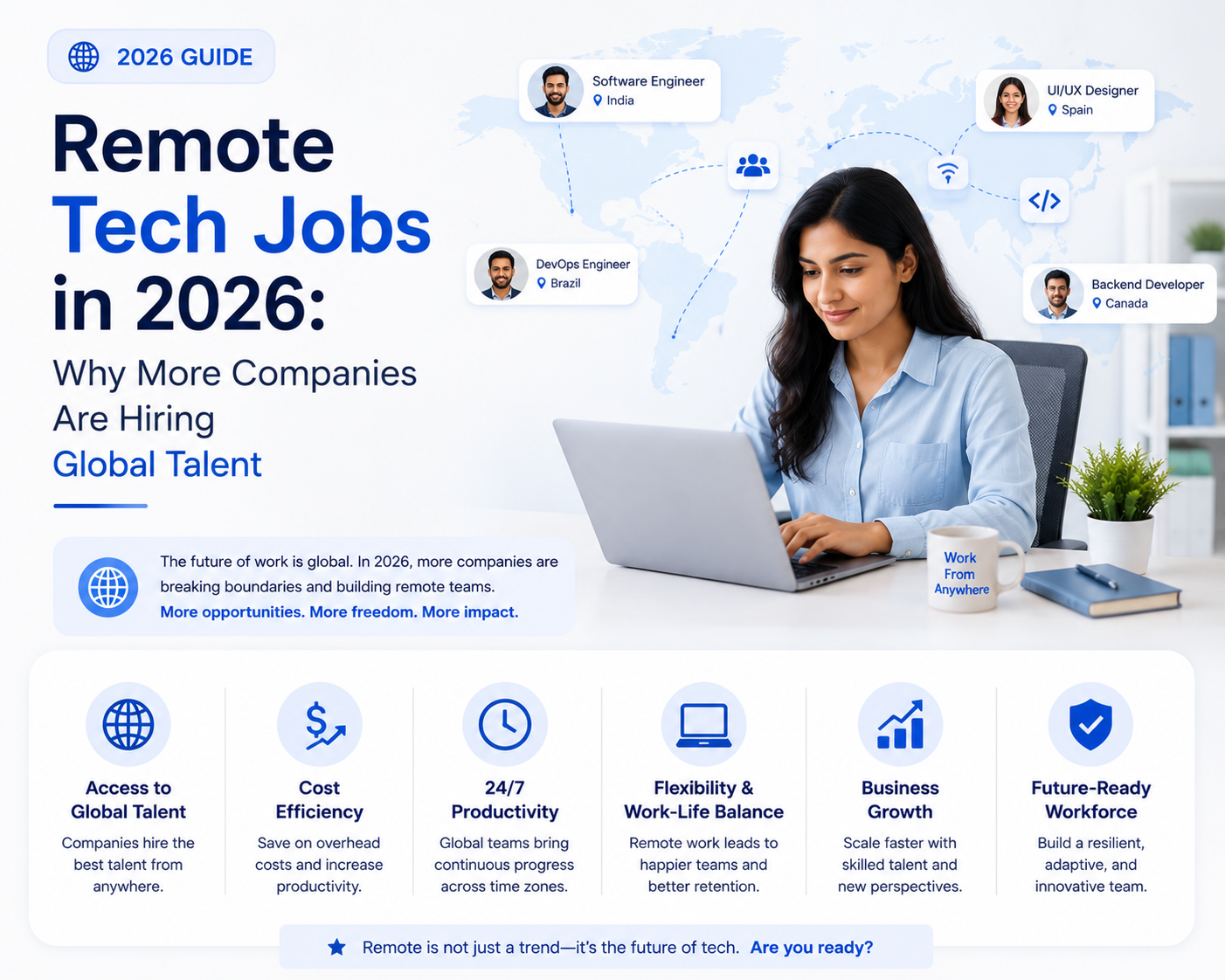
Remote Tech Jobs in 2026: Why More Companies Are Hiring Global Talent
Remote work has transformed the global job market, especially in the technology sector. In 2026, remote tech jobs continue to grow as companies increasingly hire talent from across the world instead of limiting recruitment to a single location.
This shift has created exciting opportunities for developers, designers, engineers, and IT professionals looking for flexibility and better career growth.
Why Remote Tech Jobs Are Growing
Companies have realized that productivity is not tied to physical office locations. With better collaboration tools, cloud infrastructure, and digital communication, remote teams now operate efficiently across multiple time zones.
Key reasons behind remote job growth include:
-
Access to global talent
-
Reduced operational costs
-
Improved employee satisfaction
-
Flexible work culture
-
Faster hiring processes
Businesses can now hire the best candidate regardless of location.
Most In-Demand Remote Tech Roles
Several technical roles are highly suitable for remote work.
Popular remote roles include:
-
Software Developer
-
Full Stack Developer
-
UI/UX Designer
-
DevOps Engineer
-
Cloud Engineer
-
Data Analyst
-
Cybersecurity Engineer
-
AI Engineer
Demand for skilled remote tech professionals continues to rise.
Skills Required for Remote Jobs
Remote work requires more than technical knowledge.
Important skills include:
-
Strong communication
-
Time management
-
Self-discipline
-
Collaboration tools
-
Problem-solving ability
Candidates who manage tasks independently often perform better in remote environments.
Benefits of Remote Tech Jobs
Remote jobs offer major advantages:
-
Better work-life balance
-
Reduced commuting stress
-
Global salary opportunities
-
Flexible schedules
-
More job options
This flexibility makes remote work highly attractive for modern professionals.
Challenges of Remote Work
Remote jobs also come with challenges.
Common difficulties include:
-
Isolation
-
Communication gaps
-
Time zone differences
-
Work-life boundaries
Successful remote workers learn how to overcome these challenges.
Final Thoughts
Remote tech jobs are no longer temporary trends—they represent the future of work. In 2026, companies increasingly prioritize skills and results over physical presence. Professionals who adapt to remote work culture will gain access to global career opportunities.
-