
Blog Detail
-
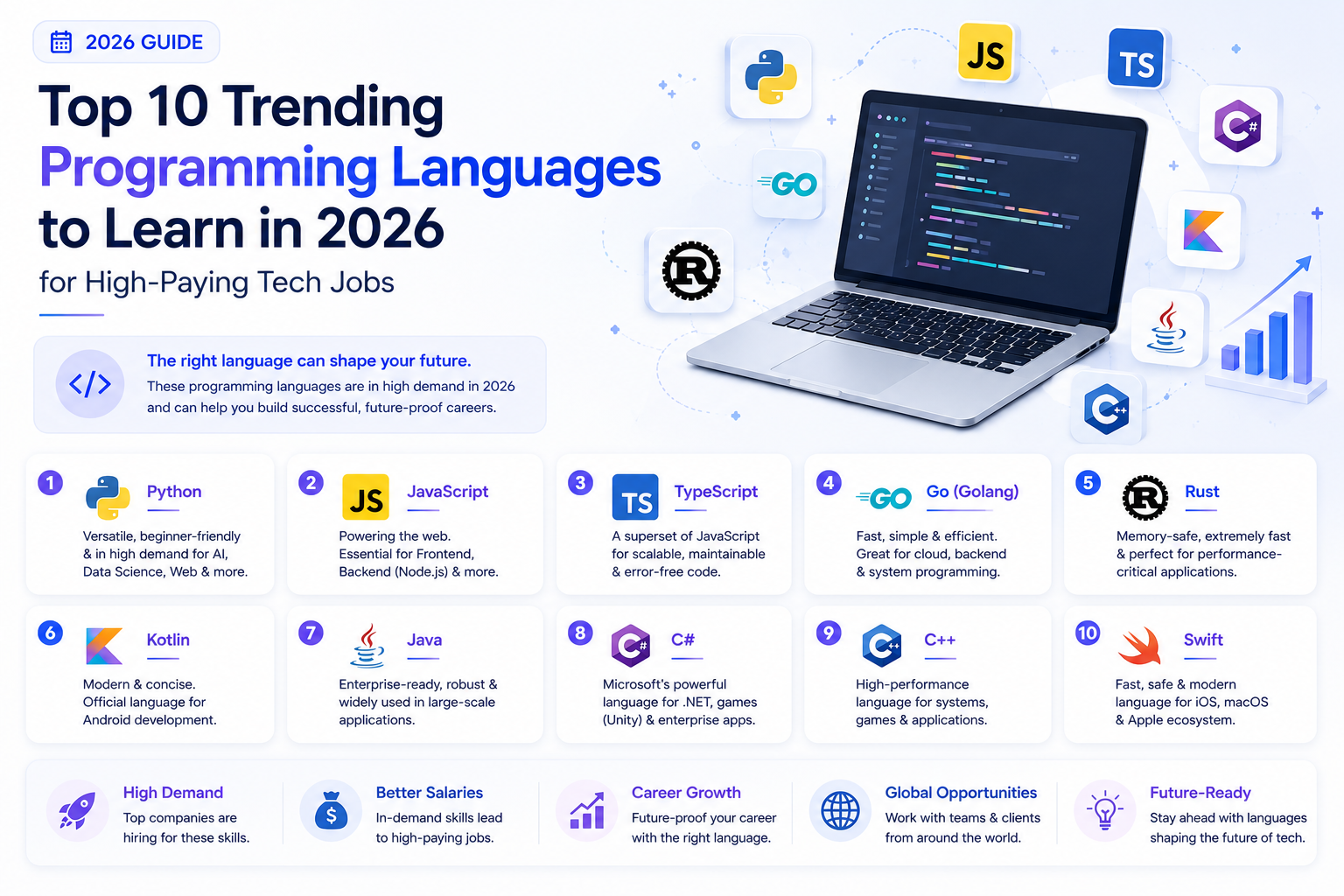
Top 10 Trending Programming Languages to Learn in 2026 for High-Paying Tech Jobs
Technology is evolving faster than ever, and so are the skills companies demand. Whether you are a fresher starting your tech career or an experienced developer planning to upskill, learning the right programming language can open doors to better job opportunities and higher salaries.
In 2026, companies are actively hiring developers who can build scalable web applications, AI-powered tools, cloud systems, and mobile apps. But with so many programming languages available, choosing the right one can feel overwhelming.
Here are the top programming languages trending in 2026 and why they matter for your career.
Why Choosing the Right Programming Language Matters
The programming language you learn influences:
-
Types of jobs you qualify for
-
Salary potential
-
Industry demand
-
Career growth opportunities
Instead of learning everything, smart developers focus on technologies that align with market demand.
1. Python
Python remains one of the most popular programming languages in 2026.
It is widely used in:
-
Artificial Intelligence
-
Machine Learning
-
Data Science
-
Automation
-
Backend development
Python is beginner-friendly and highly versatile, making it a top choice for both freshers and professionals.
2. JavaScript
JavaScript continues to dominate web development.
It powers:
-
Interactive websites
-
Frontend applications
-
Backend systems using Node.js
-
Full-stack development
Frameworks like React, Angular, and Vue keep JavaScript highly relevant.
3. TypeScript
TypeScript has become a preferred choice for large-scale web applications.
Benefits include:
-
Better code quality
-
Improved debugging
-
Easier maintenance
-
Strong type safety
Many companies now prefer TypeScript over plain JavaScript.
4. Java
Java remains a strong enterprise language.
Major industries using Java:
-
Banking
-
FinTech
-
Enterprise software
-
Android development
Its reliability and scalability keep demand high.
5. Go (Golang)
Go is gaining popularity for cloud and backend systems.
Why companies like Go:
-
Fast performance
-
Simple syntax
-
Excellent concurrency support
-
Great for microservices
Many cloud-native companies use Go extensively.
6. Rust
Rust is becoming popular for performance-critical systems.
It offers:
-
Memory safety
-
High performance
-
Secure systems programming
Rust is especially valuable in cybersecurity and infrastructure engineering.
7. PHP
Despite being underrated, PHP remains important in 2026.
PHP powers many websites and business applications, especially through frameworks like Laravel.
Common use cases:
-
Web applications
-
Admin dashboards
-
CMS platforms
-
E-commerce systems
PHP developers continue to be in strong demand.
8. Kotlin
Kotlin is a leading language for Android development.
Advantages:
-
Modern syntax
-
Better safety features
-
Official Android support
It has largely replaced Java for modern Android apps.
9. Swift
Swift is essential for iOS development.
Used for:
-
iPhone apps
-
iPad apps
-
Apple ecosystem development
As mobile app demand grows, Swift remains valuable.
10. SQL
SQL may not be a traditional programming language, but it remains critical.
Almost every application needs databases.
SQL helps with:
-
Data retrieval
-
Reporting
-
Analytics
-
Backend operations
Developers with strong database skills stand out.
Which Programming Language Should You Learn?
Choose based on your career goals:
-
Web Development → JavaScript, TypeScript, PHP
-
AI / ML → Python
-
Mobile Development → Kotlin, Swift
-
Backend / Cloud → Go, Java
-
System Programming → Rust
Final Thoughts
There is no single “best” programming language for everyone. The best language depends on your interests and career goals.
In 2026, developers who continuously learn and adapt to industry trends will have the biggest advantage. Focus on mastering one core language first, then expand into related technologies for long-term career growth.
-